Guide · Experience design
What is placemaking?
A working definition, the four kinds cities practise, what each one returns in wellbeing and in trade, and where experience design takes the work next.
A working definition
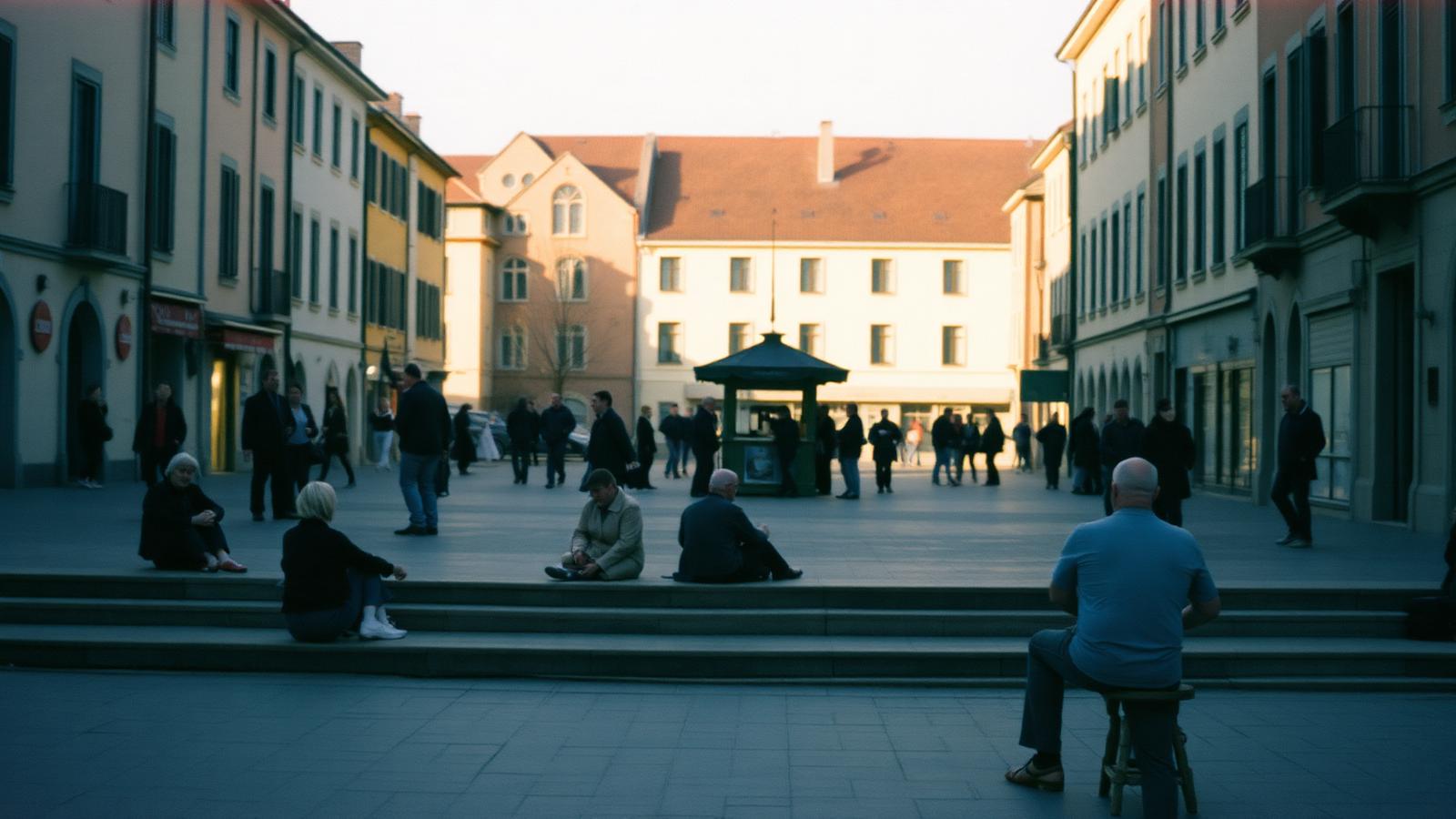
Placemaking is the practice of shaping a public space around the life people already want to have in it. It arranges the physical things — seating, shade, thresholds, ground-floor uses, planting, light, programming — so that a street, square or park invites people to stay.
The idea is old and the term is younger. Jane Jacobs watched who used a sidewalk and when; William H. Whyte filmed plazas in New York and found that the best predictor of a well-used space was somewhere comfortable to sit. Project for Public Spaces turned those observations into a method. The through line is consistent: start from observed behaviour, then change the space to serve it.
That makes placemaking a discipline of attention before it is a discipline of construction. The first move is watching a place at eight in the morning, at one, at six and after dark, and writing down what it asks for.
Lens
Four kinds of placemaking
- Standard placemaking — the ordinary upkeep of public life: benches, bins, lighting, crossings, planting, clean frontages. Low drama, high return, and the foundation everything else sits on.
- Tactical placemaking — short, reversible interventions used as tests. A parklet, a road closed on Sundays, a set of moveable chairs. Cheap enough to be wrong.
- Creative placemaking — culture as the organising force: makers, performance, light, commissioned work that changes who feels invited.
- Strategic placemaking — the long horizon: land use, tenancy mix, transport, ownership and the policies that decide whether the other three can hold over a decade.
Most districts are strong in one and thin in the rest. A district with beautiful cultural programming and broken benches is telling people that it wants their attention but not their time.
Culture
Creative placemaking
Creative placemaking puts artists, makers and cultural organisations at the centre of the work — not as decoration applied at the end, but as the reason a space changes use. A maker's market in a dead arcade, a lighting commission on an underpass, a season of performance on a set of steps.
It earns its place when it changes behaviour that outlasts the event. The test is what the space is like on the ordinary Tuesday three months later: whether the arcade kept its footfall, whether the underpass is now walked after dark, whether the steps are still sat on. Programming that leaves no residue is entertainment, and worth funding as entertainment rather than as infrastructure.
Return
What placemaking returns
Placemaking is usually argued for in the language of wellbeing, and it delivers there: more contact between strangers, more time outdoors, more reasons for an older resident to leave the house. The same moves show up on a balance sheet, and the two are one argument rather than two.
A person who stays forty minutes in a district spends differently from a person who passes through in four. Seating, shade and a reason to linger convert movement into dwell time; dwell time converts into trade at the frontages, which converts into occupancy, which converts into the rates and rents that fund the next round. The chain runs the other way too — a district that gives people nowhere to be loses the trade first and the tenants after.
This is what we call return on experience: the value a place creates in dwell time, spend, trust and wellbeing together. Our companion guide on the economics of wellbeing sets out how to put numbers against it.
Practice
Six moves that hold up
- Somewhere to sit, every hundred metres. Whyte's finding remains the highest-return intervention available to a place manager, and the cheapest.
- Work the threshold. The two metres either side of a doorway decide whether a shop, library or café belongs to the street. Widen it, shade it, let the use spill.
- Protect the third places. The café, the pub, the barbershop and the library are where a district's loose ties form. Treat their rents and their opening hours as infrastructure decisions.
- Programme as product. Give a place a rhythm people can plan around — a market on the same day, a repeated evening use — rather than one large annual event.
- Design for the last hour of light. Most districts are designed for the working day and empty at six. Lighting, evening uses and a safe route home extend the day a district can earn from.
- Keep what only this place has. The trader, the building, the accent, the odd corner. Authenticity is the one asset a shopping centre cannot reproduce.
Method
Measuring whether it worked
Footfall counts tell you a place was crossed. They say nothing about whether it was enjoyed. A workable baseline replaces counting people with counting time and mix:
- Dwell time — median minutes spent, sampled at four times of day across a weekday and a weekend.
- Who is present — age mix, groups against solo users, and whether children and older residents appear unaccompanied.
- Evening use — activity in the two hours after dark, the sharpest indicator of felt safety.
- Trade at the edge — vacancy and turnover on the frontages adjoining the intervention.
- Felt experience — a short repeated survey on belonging, comfort and whether people would choose to stay.
Take all five before the intervention and again ninety days after. Keep the moves that shifted them; retire the rest without ceremony.
Next
From placemaking to experience design
Placemaking names the intervention. Experience design — the XD in districtXD — names the standard it is held to: how the place feels to be in, hour by hour, evidenced before and after.
In practice that means three things a placemaking programme often skips. A baseline of felt experience, so the district knows what it started with. An explicit account of what each move is expected to change. And a return measured in both wellbeing and trade, so the case for the next round is already written when the budget meeting comes.
Read more on the practice in experience design and on the measurement layer in District Intelligence™.
FAQ
Common questions
- What is placemaking?
- Placemaking is the practice of shaping a public space around the life people already want to have in it — arranging seating, thresholds, uses, planting and programming so that a street or square invites people to stay rather than pass through.
- What is creative placemaking?
- Creative placemaking puts artists, makers and cultural organisations at the centre of that work: a market of makers, a lighting commission, a mural programme or a season of performance used deliberately to change how a place is used and who feels welcome in it.
- What is the difference between placemaking and experience design?
- Placemaking describes the intervention: what gets built, planted, programmed or opened. Experience design describes the standard the intervention is held to — how the place feels hour by hour, measured before and after, so a district can tell which moves earned their keep.
- How do you measure whether placemaking worked?
- Measure time spent rather than people counted. Dwell time, return visits, age mix, evening use, vacancy on the adjoining frontages and a short belonging survey, all taken before the intervention and again ninety days after.
Join
Becoming a District
districtXD is a global network for places designing for how they are experienced — sharing instrumentation, protocols and a common language for what a district returns in wellbeing and in trade. Founding Districts help shape the framework and take the first places in the Index.
Apply to become a Founding District
An initiative of XDG Labs · from the makers of the Conscious Cities Index